 Skip-the-line available
 Things to do in Guimarães, the birthplace of Portugal
The palace, the castle, the medieval old town, the Penha viewpoint and where to eat — everything worth your time in the city where Portugal began.
Guimarães wears its history lightly for a place that calls itself the birthplace of a nation. Its monuments cluster within an easy walk, its old town is made for wandering, and a cable car lifts you above it all. Here's what to see and do, roughly in the order that makes the best day.
Paço dos Duques de Bragança
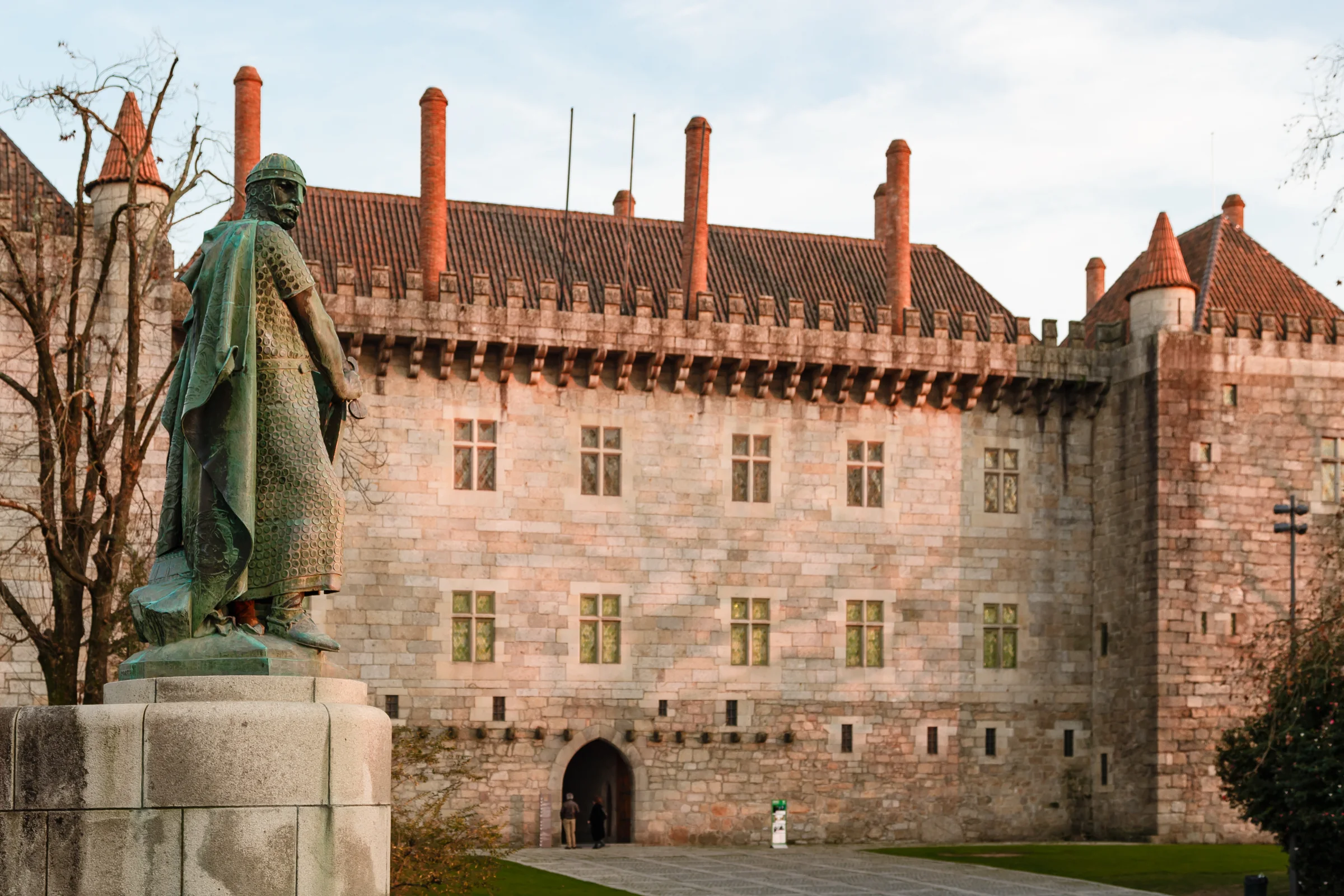
Start at the ducal palace, the city's flagship monument and one of the most distinctive in Portugal. Begun in the 1420s by the first Duke of Bragança, it is a Burgundian-style manor of steep roofs and thirty-nine brick chimneys, filled with Flemish and Pastrana tapestries, a great banquet hall, an armoury and a chapel. Allow 60 to 90 minutes; booking a morning or afternoon window lets you skip the ticket-office queue.
The palace alone justifies the trip to Guimarães, and it sets up everything else — the castle is a two-minute walk away, and the old town spills downhill from its gates.
Guimarães Castle
Just above the palace stands Guimarães Castle, a 10th-century fortress rebuilt in stone and bound up with the founding of Portugal: Afonso Henriques, the first king, is traditionally said to have been born here, and the little Romanesque church of São Miguel beside it is where tradition holds he was baptised.
Climb the keep for views over the rooftops, then read the famous line on the old town wall below — 'Aqui nasceu Portugal', Portugal was born here.
The medieval old town
The historic centre, inscribed on the UNESCO World Heritage list, is among the best preserved in the country. Its heart is two linked squares — Largo da Oliveira, with its Gothic shrine and the former collegiate church, and the arcaded Praça de São Tiago — surrounded by a web of cobbled lanes, half-timbered houses and quiet courtyards.
It rewards aimless wandering more than a checklist. Give yourself an hour to drift, pausing for a coffee or a pastel in one of the squares.
Alberto Sampaio Museum and the churches
The Alberto Sampaio Museum, in the cloisters of the former collegiate church of Nossa Senhora da Oliveira, holds outstanding sacred art, gold and silver work, and — its most famous piece — the tunic King João I is said to have worn at the Battle of Aljubarrota in 1385. It's a compact, high-quality collection that pairs perfectly with the palace.
Nearby, the churches of São Francisco and the Senhora da Consolação (the Igreja dos Santos Passos) add a baroque note to the medieval city.
Penha and the cable car
For the best view in Guimarães, ride the Teleférico da Penha from the edge of the city up to the wooded Penha hill. At the top you'll find walking trails, curious rock formations, a sanctuary church and a panorama that stretches across the Minho on a clear day.
It's an easy half-hour excursion and a fine way to end an afternoon, especially near sunset.
Where to eat and what to try
Guimarães eats well and affordably. Look for northern-Portuguese classics — rojões (fried pork), bacalhau in its many forms, and hearty caldo verde — in the tascas around the old town. Largo da Oliveira and Praça de São Tiago are lined with terraces ideal for a long lunch.
Save room for the local sweet: the torta de Guimarães, a crisp pastry filled with squash and almond, sold in the city's traditional pastelarias.
Frequently asked
What is Guimarães famous for?
As the 'birthplace of Portugal' — the medieval cradle of the nation and the seat of the first Dukes of Bragança. Its castle, ducal palace and UNESCO old town are the main draws.
How long do you need in Guimarães?
A full day is ideal to enjoy the palace, castle, old town and the Penha cable car without rushing; half a day covers the essentials.
Is Guimarães worth visiting?
Yes — it's one of northern Portugal's most rewarding city visits, compact, historic and easily reached from Porto.
What should I not miss in Guimarães?
The Paço dos Duques de Bragança, Guimarães Castle, the old town squares (Largo da Oliveira and Praça de São Tiago), the Alberto Sampaio Museum, and the Penha viewpoint.
Is Guimarães walkable?
Very — the monuments and old town cluster within a short, if cobbled and occasionally steep, walk. Only the Penha hill needs the cable car or a drive.